


When you pull into the long gravel drive of Coyote Hill Foster Care Ministries in Harrisburg, Missouri, it’s hard to miss the giant red barn on your left. Overton Arena is home to all 16 of our horse friends.
Overton Arena is also a place where children build confidence, gain an understanding of horsemanship, and process feelings through equine therapy.
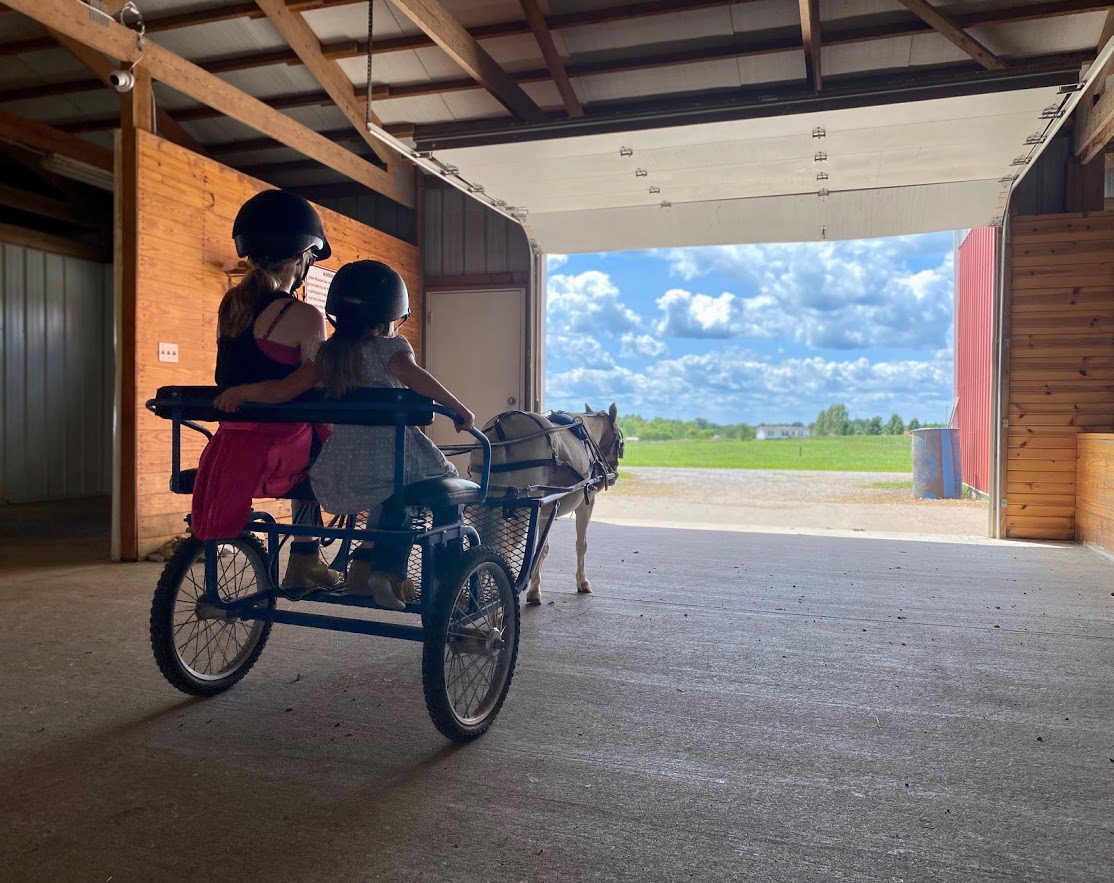
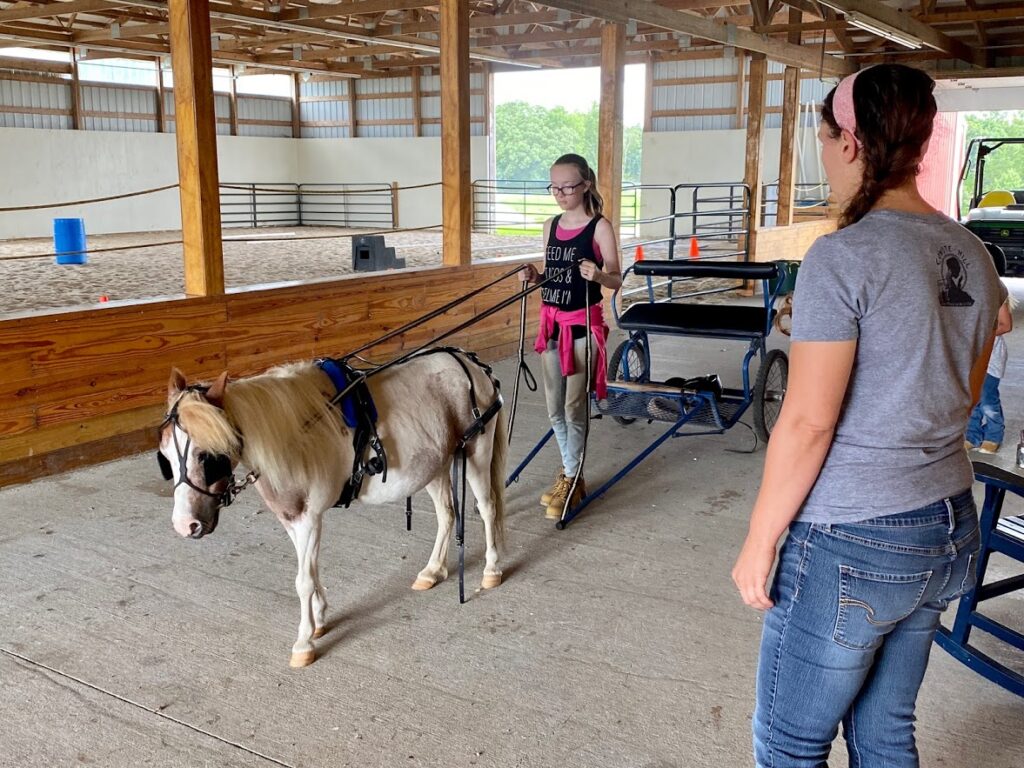
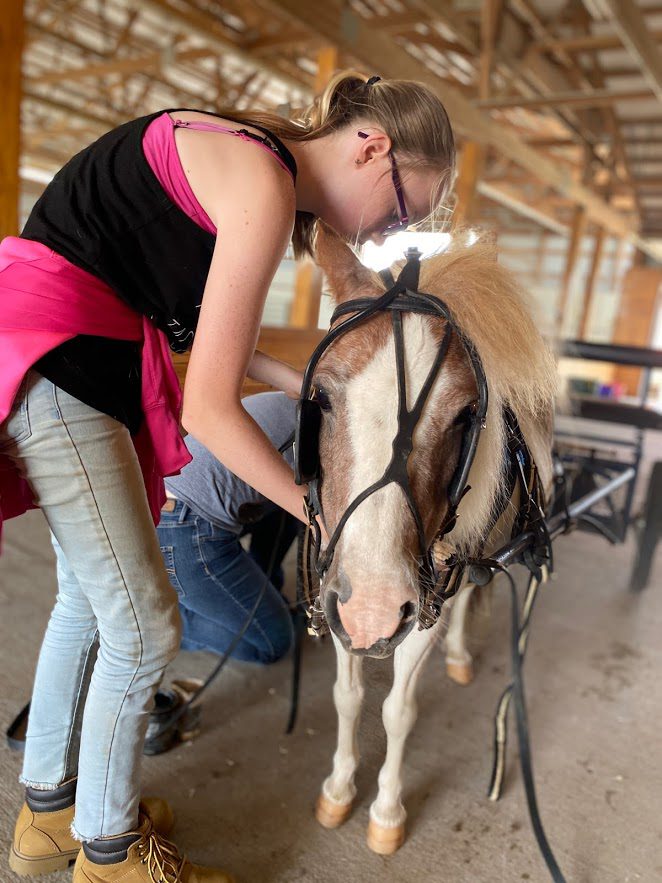
Five of our equine team members are miniature horses. Cajun, Dala, Lacy Jean, Lizzy, and Twinkie are all much smaller in stature compared to the rest of our horses. A few of them can be ridden by young children the traditional way, and several are working on cart driving.

That’s where our kids come in. We have several children who use their horsemanship time to work with our minis on cart training.
“Lots of kids who find big horses intimidating will be more drawn to the minis because they are smaller,” Equine Specialist Rebecca Buchholz said. “As they work with the minis and get to understand horses and horse behavior, they might feel courageous enough to try a larger horse.”
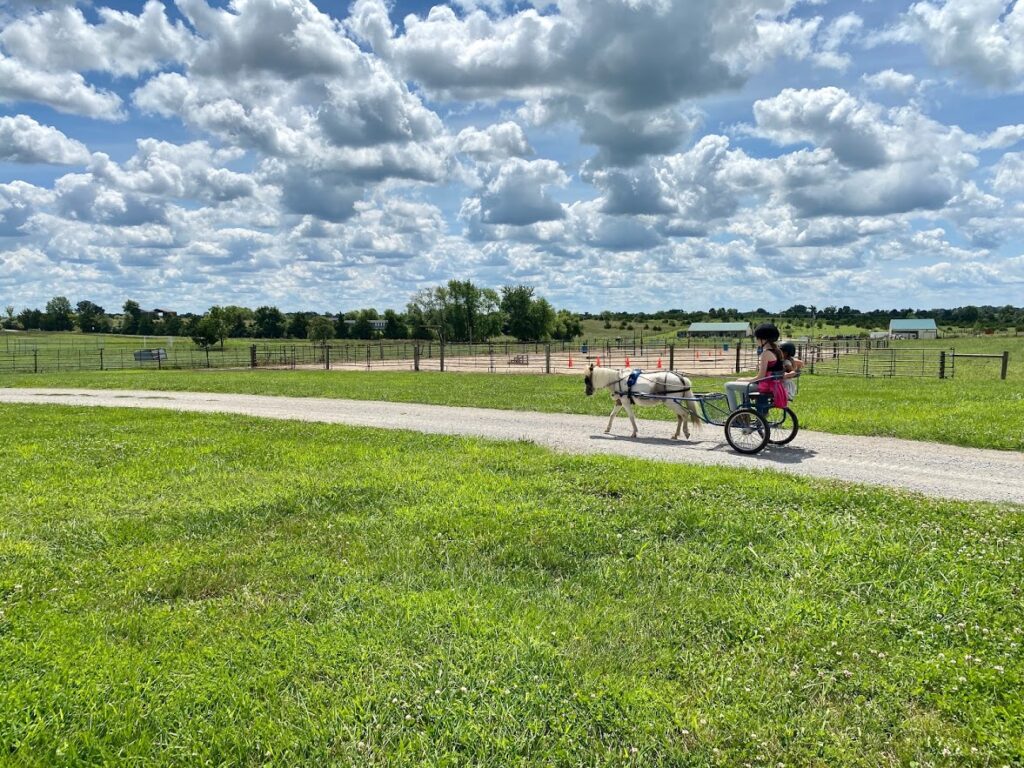
Our tried and true cart driver is Twinkie. She is a steadfast teacher to those interested in mastering driving skills and etiquette. Rebecca said amid the pandemic, a rather stressful time, more children have been requesting to do pony cart rides in order to relieve anxiety.
“Driving the pony cart is extremely relaxing,” Rebecca said. “It’s slow, methodical movement; the horse’s hooves beating rhythmically on the ground. As you make your way around campus in the cart, you can also enjoy nature sounds.”
Rebecca also works with the minis for Natural Lifemanship. She said the opportunities the minis present are unique.
“Because of their size, it’s actually harder to use a mini than a larger horse,” she said. “There is less margin for error when using body language to talk to the horse and build a relationship. On a large horse you might have a three to four foot area to signal at so the horse understands what you want. With a mini you have six inches, so you have to be very precise!”
Because minis are so small, there can be a tendency for people to think it is okay to push and pull them around. Rebecca said this presents an opportunity for lessons.
“The minis teach kids in foster care respect for all living things.” she said. “Our home parents are taught the love language of our kids so they can learn to trust as well as obey. The children learn a similar language of compassion for the minis, to show them trusting and obeying can walk hand in hand. This is beautiful, considering it mirrors how God shepherds us.”
We are grateful to the Boone County Children’s Services Fund for funding our Equine-Assisted Activities program. This work would not be possible without these funds!